Christian Fiction Scavenger Hunt, Stop #30
Christian Fiction Scavenger Hunt Stop #30
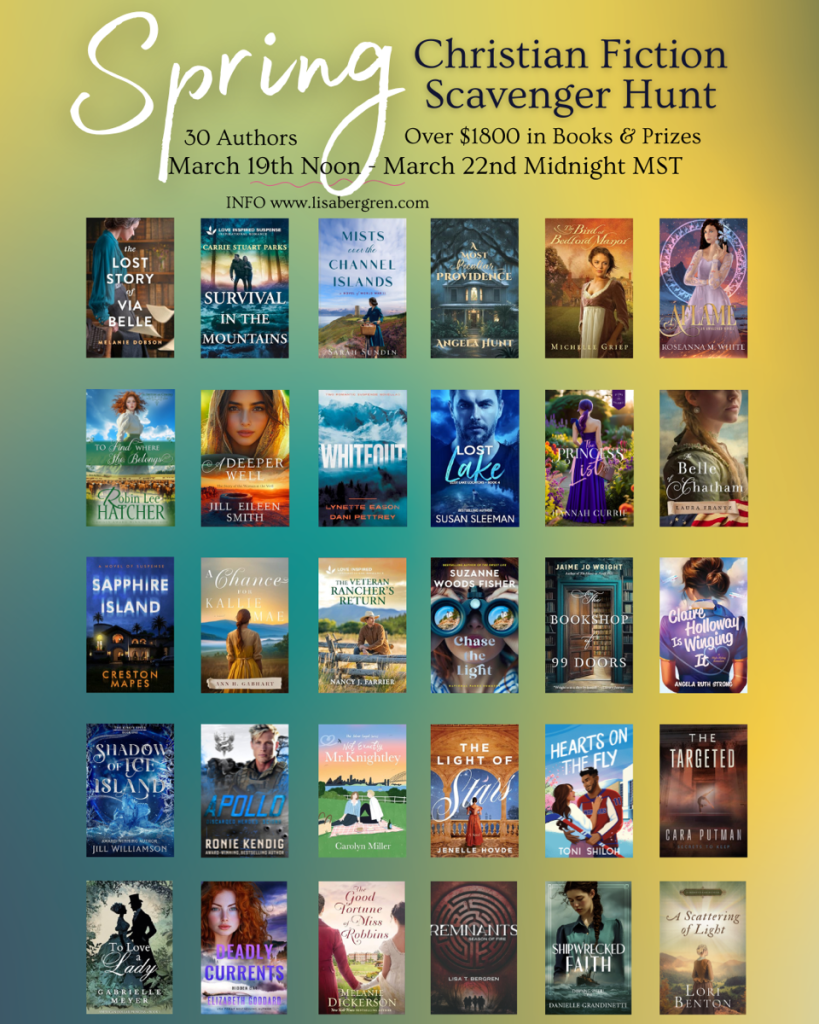
Welcome to the Christian Fiction Scavenger Hunt! If you’ve just discovered the hunt, be sure to start at Stop #1, and collect the clues through all the stops, in order, so you can enter to win one of our top 5 grand prizes!
- The hunt BEGINS on 3/19 at noon Mountain with Stop #1 at LisaBergren.com.
- Hunt through our loop using Chrome or Firefox as your browser (not Explorer).
- There is NO RUSH to complete the hunt—you have all weekend (until Sunday, 3/22 at midnight Mountain)! So take your time, reading the unique posts along the way; our hope is that you discover new authors/new books and learn new things about them.
- Submit your entry for the grand prizes by collecting the CLUE on each author’s scavenger hunt post and submitting your answer in the entry form at the final stop, back on Lisa’s site. Many authors are offering additional prizes along the way!
Hi! I’m Melanie Dickerson and I love a good romance! I’ve written Medieval Fairy Tale Retellings and Regency Romantic Suspense, and now I’m writing Regency Romance. Two of my favorite novels are Jane Eyre and Pride and Prejudice, both of which inspired my new book, The Good Fortune of Miss Robbins. You can learn more about me on Facebook and Instagram.
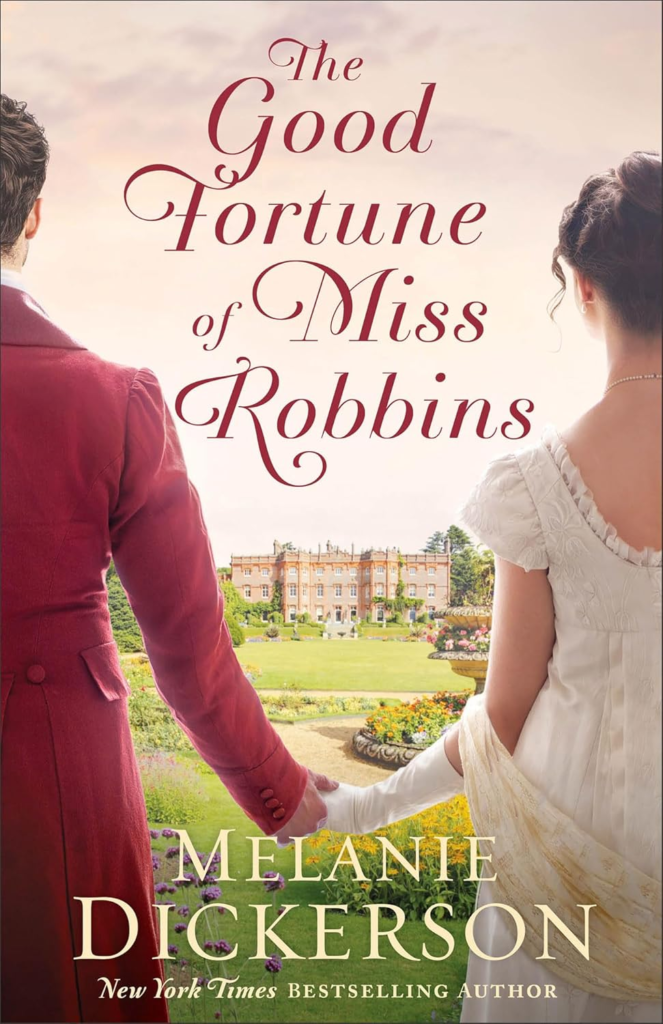
Charlotte Robbins accepts a governess position for the Earl of Brookhaven’s siblings despite rumors of the earl’s severe and mysterious demeanor. As a lowly governess, Charlotte entertains thoughts of possible romance with an eligible servant until she does fall unexpectedly in love–with the pensive earl himself.But love does not mean a match is possible, and the earl’s friends warn Charlotte that if he were to fall for her, it would ruin him.
Just as Charlotte resigns herself to the impossibility of her feelings, she receives news that she has inherited a fortune from a long-lost relative. Now thrust into London high society, Charlotte grapples with suitors vying for her attention, but her heart still belongs to the Earl of Brookhaven. As secrets unfold, she’s no longer certain if her newfound fortune is a blessing–or if it is the very thing that threatens the love she’s always longed for.
Orphans in Regency England

As an orphan, Charlotte faces unique challenges. People in England during the Regency era did not think of children the way we do. For example, could you imagine sending your baby to a neighboring farm family or a village woman to be raised and cared for until they were two years old? That is exactly what Jane Austen’s own family did. Her mother nursed her child until about three months old, then Mrs. Austen sent them to live with a nearby family.
In Regency England, orphaned children often lived on the streets. If they hoped to learn a trade, they had to find a wealthy patron who would sponsor them at an orphanage. Then they must go through a process of application, and the board of the home for orphans would vote on which applicants to admit. The children would then learn a trade such as carpentry or how to work as a servant in the wealthiest homes.
At this time, legal adoption as we know it did not exist. And as street children were seen as a bigger problem, laws were passed with harsh punishments for begging or sleeping on the street. To address this, workhouses were created in the 1830s, but they were harsh, cruel places that provided little or no care and forced children to do hard labor. In The Good Fortune of Miss Robbins, Charlotte Robbins, orphaned at the age of five, was fortunate to have had parents that were able to leave her just enough money to provide her a place at a school for girls. Charlotte and one or two other girls were permanent boarders, educated alongside girls who were sent to the school to be educated for a short time and then to return home. I hope you enjoy her story!
Here’s the Stop #30 Basics:
If you’re interested, you can order The Good Fortune of Miss Robbins on Amazon, Baker Book House, Barnes & Noble, ChristianBook or at your local bookstore!
Clue to Write Down: read!
Next Stop is for the Grand Prize, Stop #31.
But wait! Before you go, I’m offering an additional giveaway, either physical book (for continental US residents only) or the digital ebook, of another of my Regency romance novels, A Spy’s Devotion, the first book in my Regency Spies of London series. All you have to do is subscribe to my newsletter and leave a comment on this post saying you subscribed, or that you were already subscribed. You get one extra entry for each of the following: Follow me on Amazon, Follow me on Instagram, Follow me on Facebook, and/or Follow me on BookBub.
Comments
Already subscribed 🙂
I Subscribe/Follow the following:
Newsletter
Amazon
Instagram
Facebook
BookBub
Subscribed and following all but IG.
subscribed and following on instagram, facebook and bookbub
Subscribed and following all 4 places.
I subscribed and am following you all 4 places.
I subscribed!
I subscribe and follow you everywhere! I love your books!
I am a newsletter subscriber as well as following you on Amazon, Facebook, and BookBub.
Subscribed, and followed you on BookBub & Amazon. 🙂
I suscribed!!! Thank you for sharing your stories!!!
Subscribed!
I’m already a subscriber! And, I follow on all 4 sites. 😀
I’m already subscribed! 🙂 I also follow you on facebook and instagram!
Hi, Paige! You were chosen as my winner! Can you send me an email? melaniedickerson23 at gmail dot com
I have subscribed!
Signed up for the newsletter – thank you!
Already subscribed and following you on Amazon and facebook
Signed up for your newsletter, following you on Amazon, IG, and Facebook. 🙂
I just subscribed!
I already subscribed and follow you on Facebook Amazon and Bookbub
I signed up for your newsletter and I followed on Instagram, Facebook, Amazon, and BookBub
New follower – so excited to check out your books.
Already Subscribed and am following on Amazon!
Followed on all four
I am already on your newsletter. I reviewed a book or two of yours in past
I’m subscribed and following on all mentioned platforms!
I am already a subscriber and follow you on all the sites.
Sounds like a good book!
Such a fun scavenger hunt! Can’t wait to look into all your books!
Subscribed and following on Amazon, Facebook and Book Bub
Hey Melanie,
I have already subscribed. I would like to be entered into the drawing. Thanks!
Subscribed
Done! Now that I have discovered your books I’m following
I love your books!
Subscribed. Love your books!
I subscribed
Subscribed :)))
I subscribed to your newsletter, and already follow on Amazon, Instagram, FB, and Bookbub
I subscribed =)
Subscribed!
I’m subscribed and I follow you on BookBub
subscribed!
I haven’t read your books before, but I can’t wait to.
Subscribed.
Already following on Amazon, Instagram, Facebook and Bookbub.
Subscribed . love adding new spy books to my library
Already subscribed and already follow on Amazon, Instagram, Facebook and Bookbub! (I’ve been a fan for awhile now, lol😉)
All signed up – thanks for the awesome giveaway!
Subscribed! Excited to see you on this list, I absolutely loved your Fairy Tale Romances growing up (and still do now)!
I subscribed!
I’m already subscribed, and am following on all 4 platforms. Thanks for the opportunity to participate in your book giveaway 😁🌷
subscribed
Subscribed and followed!
I subscribed!
I’ve subscribed and followed
Follow you everywhere and signed up for your newsletter. The Good Fortune of Miss Robbins sounds like a wonderful book.
I subscribed!
I am already subscribed and I love your books!
I am a newsletter subscriber and Instagram follower! Thank you!
Thank you!
I subscribed and followed on Bookbub and Amazon.
Subscribed! Yay!
I subscribed, and also followed on Amazon, Instagram, and Facebook!
I subscribed!
I’m already subscribed!
Also, I’m kinda stalking you everywhere lol
I’m subscribed!
I subscribed and followed all the places!
I subscribed!
I’ve subscribed!
I’ve subscribed! I’m looking forward to reading your books!
Subscribed
Subscribed
Already Suscribed!
I am already subscribed, I love your books!
I am already subscribed!
Subscribed!
Already subscribed!
I look forward to reading your most recent book. You were one of my first authors when I first started reading books on a regular basis. I have enjoyed reading many of your books since.
I subscribed already!
I’m already subscribed! 😃
I am already subscribed!
I am already subscribed!
I’m already following you on Amazon, Bookbub, and Facebook!
Please enter me in the giveaway. Thanks!
Subscribed
Your books are intriguing. Love the mystery and the reflections of our King.
I subscribed to your newsletter & followed you on Amazon, Facebook & Bookbub.
I’m subscribed to your newsletter, Amazon, and Facebook
Subscribed! Thanks
I am already subscribed and follow you on BookBub 🙂
Already subscribed!
I have subscribed and I now follow you on Facebook!
follow on insta, facebook, and subscribe to newsletter!
Love your books!
I’m already subscribed to your newsletter.
I’ve become a subscriber and am following you on AZ, IG, FB and BB. Thanks for participating in this scavenger hunt! It’s a great way for readers to discover new authors.
I’m subscribed (I thought I was but I resubscribed when I couldn’t find any in my email). I also follow you on Amazon, Instagram, Facebook, and Bookbub.
Subscribed and following everywhere. 🙂
Following you on Amazon, Instagram, Bookbub and joined your newsletter. Happy Spring!
Following on Amazon, Instagram and Bookbub. Thank you for the opportunity. God bless you.
I’m subscribed to your newsletter and follow you on all the above platforms. Thank you for the chance to win!
I’m already subscribed and following you on Amazon, Instagram, Facebook, and BookBub.
Subscribed!
I subscribed to yoru newsletter!
I subscribed to your newsletter!
Would love to win a print book Thank you for the chance
Follow on FB and IG
I already subscribe!
I subscribed, thank you
I subscribed. Thank you 🙂
Following on all platforms
Thank you
Already subscribed and follow you on amazon, instagram, facebook, and bookbub.
I subscribed and followed on Instagram and Bookbub
My sister and I are already subscribed! On Amazon and the newsletter!
Subscribed
I’m already subscribed and I follow you on Instagram!!
Hi Melanie, I would love to read your book. I followed you on BookBub, Goodreads and Amazon. Unfortunately I have had to take a break from Facebook and Instagram because my account was hacked into. Thank you for the chance.
I’m subscribed – I received your email about this scavenger hunt. I also follow you on Amazon, Instagram & Facebook!
I just subscribed and I’m now following you on insta. Thank you!
Subscribed and following on all platforms!! So excited for this giveaway!
Subscribed and followed on IG!
subscribed!
I am a Amazon, Instagram follower, and a new email subscriber.
I subscribed and I’m following you on Amazon and Facebook.
Subscribed
I subscribed. Thank you for the chance to find new favorite authors 😊
Tried to sign up for newsletter but it just kept spinning and spinning, so hopefully it took! Followed on Amazon, Instagram, Facebook, and BookBub.
I have enjoyed reading your books
I’ve read a few of your earlier books but, got distracted with my love of regency stories. Delighted to learn you are writing Regency Romantic Suspense. Love a little mystery too. Looking forward to reading your Regency Spies of London series.
Subscribed!
Subscribed and already following on all platforms 🙂
Subscribed
Subscribed 🙂
I was already subscribed!
Already subscribed. And so excited for your new release! 😁
I’m already subscribed and follow on all of the above. Thank you for the opportunity!
Hey! I have just subscribed for your newsletter!
Fascinating information about orphans!
I have subscribed!
Subscribed
I subscribed and I’m following on Amazon, Bookbub, Facebook, and Instagram. Thanks!
I LOVE a Spy’s Devotion. I’m not sorry that I already own it. It’s my favorite one of her regency series that I’ve read BY FAR. Who knows, though. This one may top it–but I doubt it. Nicholas Langdon is pretty awesome.
I think I have already subscribed.😊
Already subscribed
I subscribed and am following on all platforms.
Hi Melanie, I follow you on Instagram, Bookbub and Amazon and love your books!
Hi!
I follow you on Instagram, Facebook and Amazon, and I signed up for your newsletter! I love your books. 🙂
I’m a subscriber. Also, I’m following you on Amazon, Instagram, and BookBub.
Already subscribed!
Already subscribed! Thank you!
Already subscribed!!
Subscribed and just received this book. Haven’t had a chance to read it yet.
Subscribed and following you on Amazon, Instagram, Facebook and BookBub
I’m loving this scavenger hunt and discovering authors whose books I can read!!
I subscribed, following on IG, FB, BB and Amazon.
Subscribed!
Subscribed
Subscribed and following
I subscribe and am a follower on your social media accounts! I love your books!!
I subscribed and also followed on Amazon, Instagram, and BookBub.
Already subscribed. 🙂
Already a email subscriber and I follow you on Amazon, Instagram, and Facebook. Thanks for the opportunity to enter to win one of your books!
Already a email subscriber and I follow you on Amazon, Instagram, and Facebook. Thank you for the opportunity to enter to win one of your amazing books!
I subscribed! I’ve loved your Medieval fairy tale series and am a fan of Regency tales too, so am excited to read Miss Robbins’ story soon!
I’m following you on Amazon, Facebook, Instagram, and BookBub – as well as subscribed to your newsletter. ❤️
I am a subscriber and follow you on Amazon and Facebook
I am following you and I enjoy your books.
I subscribed and followed you on Amazon, Bookbub, Instagram & Facebook
I subscribed and followed you on Instagram. I’m excited to read more of your books!
I subscribed and followed you on Instagram. I’m excited to read more of your books!
I am already subscribed I follow you on Instagram, Facebook and Bookbub.
Love the Scavenger Hunt and your books!!!
Subscribed and following on Bookbub as luwaxanna
Subscribed and following on Amazon and Instagram.
Subscribed
Already subscribed!
I Subscribed!
I signed up for your newsletter and I follow you on Amazon, Instagram, Facebook, and BookBub.
I’ve been subscribed since I discovered the Hagenheim series! You have become one of my favorite authors. I needed a cleaner series to read and your books were just what I needed. I have contacted you and you have been so helpful and kind!
I’m a subscriber to your newsletter.
I subscribe and follow.
I’m subscribed and following you on Insta! 🙂
Thanks so much for this chance! Haven’t read A Spy’s Devotion yet! Love your fairytale retelling! Already subscribed and following you everywhere!
I will follow you on Amazon and BookBub.
I am already subscribed to your newsletter. I always enjoy reading your books and look forward to the next one. Thank you for using your God given gifts.
Love your books!
Following you in FB, Amazon, and Instagram.
Already subscribed
I’m subscribed, and following you on Amazon, Instagram, Facebook, and Bookbub. 🙂 I’ve enjoyed reading a few of your fairy tale retellings, which are among my favorite books ever. 🙂
Subscribed. Already following on Amazon UK, followed on Instagram and Facebook. Love your stories
I am a follower on all of the platforms and am already subscribed to your newsletter.
Followed on all of the above. Insta with my bookstagram account. Love your books!
I am a librarian in Louisville, Kentucky and subscribed to your newsletter. Our patrons love your books!
already subscribed & following on bookbub & Instagram
I’m already subscribed. I love your books!
I’ve signed up for your newsletter
I am subscribed to the newsletter and following you on Amazon and BookBub! Thanks for the chance to win!
I subscribed and also follow you on BookBub.
I’m subscribed , I LOVE your books!
I’m already subscribed to your newsletter!
I subscribed to your newsletter!
Subscribed. Following on Amazon.
subscribed to all but amazon.
I signed up for your newsletter and I’m following on Amazon and Bookbub.
Subscribed! Thanks for doing a giveaway!🤍
I just subscribed but have read your books for years. A huge fan!
I subscribed. Thank you.
I absolutely love books set within the Regency period and would welcome the opportunity to read your, “A Spy’s Devotion”. Thank you for the chance.
I’m already a subscriber to your newsletter and follow you on all sites. Thank you for participating in the hunt and the extra giveaway!
I can’t wait to read your newest book “The Good Fortune of Miss Robbins”, it sounds so good!
I’m already subscribed and I follow you on Facebook and Instagram!
Subscribed and following on Instagram and Facebook!
I’m all subscribed!!!
I’m already subscribed to the newsletter, Amazon, and Bookbub. Started following on Instagram and Facebook:)
Hello, new here and excited for some new good reads.
I am subscribed 🙂
I already get your newsletter, and I already follow on all the things 🙂
Subscribed and following on Instagram! Thanks for the chance to win!
I’m already subscribed! I absolutely love your books and can’t wait to read The Good Fortune of Miss Robbins!
I’m already subscribed! I’ve read all of your books and absolutely love them all. I can’t wait to read The Good Fortune of Miss Robbins!
Subscribed. Thanks!
Already subscribed!
I subscribed!
Subscribed and followed you in all four places!
Subscribed and following in all the places! Thank you 🙂
I’m already subscribed! I enjoy your newsletter and I’m a big fan of your medieval books. I wish Alabama wasn’t so far away so I could meet you. I’m in Columbia, South Carolina. Maybe you’ll come here some day!
The new book looks really good.
Subscribed and following on Amazon, Facebook and Instagram 🙂
I’m already subscribed, and I have already followed you on all 4 sites. 🙂
Already subscribe, follow you on Amazon and Bookbub.
I subscribed and follow on Facebook, Amazon, and Bookbub.
I just subscribed to your newsletter.
I have read almost all your novels and thoroughly enjoyed them. I especially liked your creative retellings of fairy tales.
I have also followed you on Amazon.
Keep on writing please!
Already subscribed and follow on all
I subscribed and followed you everywhere! (Activate stalker mode!)😉
Already subscribed!
Subscribed!!!